
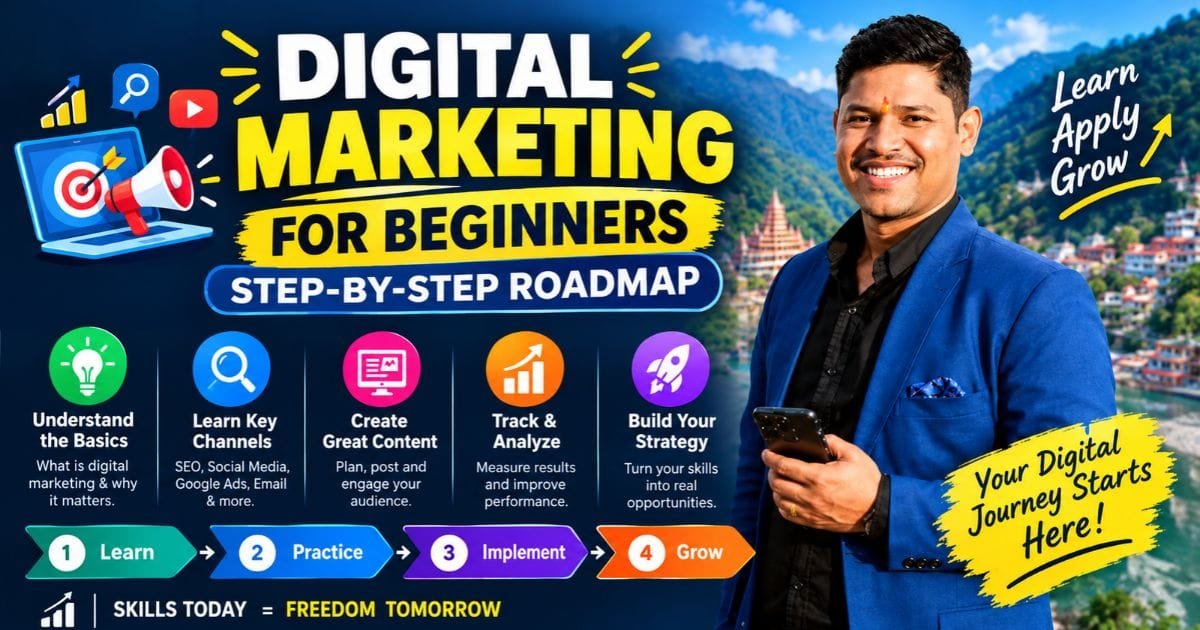
Digital Marketing for Beginners: Step-by-Step Roadmap
If you are just starting out, digital marketing for beginners can feel like an impossible mountain of jargon. SEO, PPC, CTR, CRO, and a dozen other acronyms get thrown around as if everyone already knows what they mean. The good news is that you do not need to master everything on day one. What you need is a clear starting point and a logical order to follow, so each step builds on the one before it. This roadmap is written for people with zero background in marketing, and it walks through exactly where to begin and what to skip until later.
What Digital Marketing for Beginners Actually Means
At its core, digital marketing for beginners simply means using online channels to promote a product, service, or brand. This includes your website, search engines, social media, email, and paid advertising platforms. Unlike traditional marketing, almost everything you do online can be measured, which means you can see what is working within days instead of waiting months to find out. That measurability is the single biggest advantage a beginner has today compared to a marketer working ten years ago.
Step 1: Understand Your Audience Before Anything Else
Before you touch a single tool or platform, spend time figuring out who you are actually trying to reach. What problem does your product solve, and who is searching for that solution right now? Write down their age range, location, common frustrations, and where they typically spend time online. Skipping this step is the single biggest reason beginner campaigns fail. You end up creating content and ads for an audience you have only guessed at, rather than one you genuinely understand.
Step 2: Build a Website That Works
Your website is the foundation everything else points back to. It does not need to be elaborate, but it does need to load quickly, work properly on mobile phones, and clearly explain what you offer within the first few seconds a visitor lands on it. Every social media post, every ad, and every search result eventually sends someone to this page, so it is worth getting the basics right before investing heavily in other channels.
Step 3: Learn the Basics of SEO for Beginners
SEO for beginners does not require a technical background to start. At the most basic level, it means understanding what your customers type into Google and making sure your website has honest, useful content that answers those searches. Start by researching a handful of keywords relevant to your business, and write pages or blog posts that genuinely help someone searching those terms. Getting comfortable with SEO for beginners is less about tricks and more about consistently publishing content that answers real questions better than your competitors do.
Step 4: Create a Digital Marketing Strategy for Beginners
Setting Realistic Goals
A digital marketing strategy for beginners should start with goals you can actually measure, such as website visitors, email signups, or a specific number of sales in a given month. Avoid vague goals like getting more visibility, since you will have no reliable way to know whether you actually succeeded.
Choosing the Right Channels
You do not need to be present on every platform at once. Pick one or two channels where your audience already spends time, and get comfortable there before expanding further. A focused digital marketing strategy for beginners beats a scattered one almost every time, because consistency on one channel builds trust faster than a thin presence spread across five.
Step 5: Social Media and Content Basics
Pick the platform your ideal customer actually uses, not the one that feels trendiest. Post consistently, even if that means twice a week rather than daily, and focus on content that solves a problem or answers a question rather than content that only promotes your product. Beginners often assume they need to go viral to succeed, but steady, useful posting builds far more trust over time than one lucky viral moment.
Step 6: Paid Ads, When and How to Start
Paid advertising is not something you need on day one, but once you have a working website and a basic understanding of your audience, small test campaigns on Google Ads or social platforms can bring in quick data about what messaging actually converts. Start small, track results closely, and only scale spend once you can clearly see which ads are profitable.
Digital Marketing for Small Business: What Changes
Digital marketing for small business usually means working with a tighter budget and fewer people, which makes prioritization even more important. Instead of trying every channel, focus your limited time and money on the one or two that bring the clearest return, whether that is local SEO, a well-run Google Ads campaign, or an active presence on one social platform. Digital marketing for small business owners who try to do everything at once typically end up doing all of it poorly.
Common Mistakes Beginners Make
The most common mistake is trying to do everything simultaneously instead of mastering one channel first. A close second is giving up on SEO after a few weeks because results have not appeared yet, without realizing that organic growth typically takes months. A third mistake is ignoring analytics entirely and making decisions based on gut feeling rather than actual data from your website and campaigns.
Frequently Asked Questions
Where should a complete beginner start with digital marketing?
Start by clearly defining your target audience and building a website that loads fast and explains your offer clearly. Only after that foundation is in place should you move into SEO, social media, or paid ads.
How long does it take to learn digital marketing basics?
Most beginners can understand the core concepts within four to six weeks of consistent learning and hands-on practice, though real skill develops over several months of actually running campaigns.
Is digital marketing for beginners expensive to start?
No. Many foundational steps, including SEO, content creation, and organic social media, cost time rather than money. Paid advertising can start with a very small daily budget once you are ready to test it.
What is the biggest mistake beginners make in digital marketing?
Trying to be active on every channel at once instead of focusing on one or two platforms where their specific audience actually spends time.
Do small businesses need a different digital marketing strategy than large companies?
Yes. Digital marketing for small business typically means prioritizing fewer, high-impact channels rather than spreading a limited budget across everything, since small businesses cannot absorb wasted spend the way larger companies can.
Conclusion
Digital marketing for beginners does not have to feel overwhelming once you have a sequence to follow. Understand your audience first, build a website that actually works, learn the fundamentals of SEO, create a simple strategy with measurable goals, and only then start layering in paid ads. Each step earns you the right to move to the next one, and businesses that follow this order tend to see steadier, more sustainable growth than those that chase every tactic at once.